

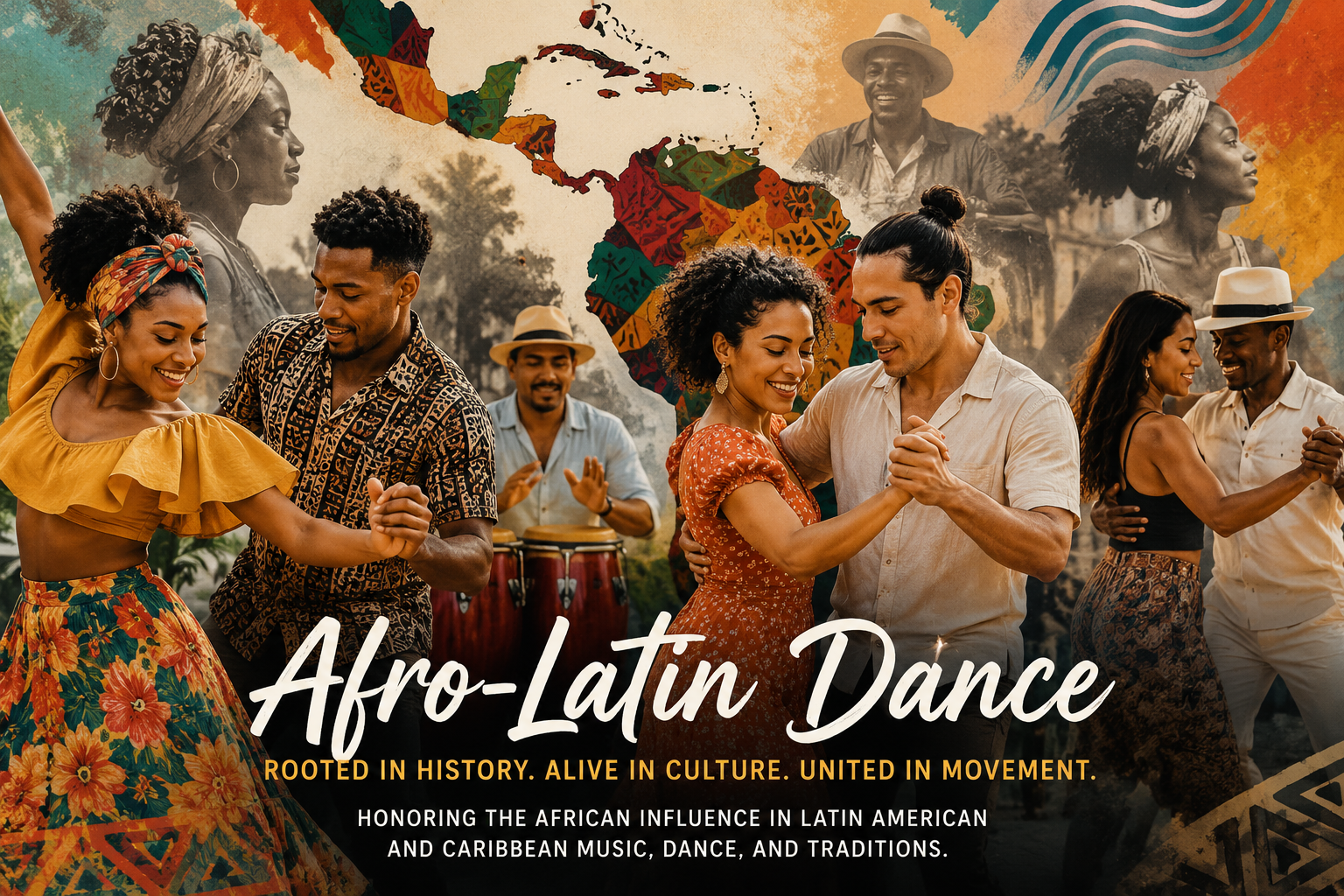
What Is Afro-Latin Dance?
When people hear the term "Latin dance," they often think of popular social dances like salsa, bachata, merengue, or cumbia. What many people don't realize is that these dance forms were shaped by centuries of cultural exchange between Indigenous, European, and African peoples throughout Latin America and the Caribbean.
The term Afro-Latin recognizes the profound influence of African peoples, traditions, music, and movement on the cultures of Latin America. Rather than erasing or overlooking those contributions, Afro-Latin dance acknowledges and celebrates them.
Why Do We Say Afro-Latin Instead of Just Latin Dance?
The term "Latin" can sometimes make it seem as though these dances emerged from a single culture or tradition. In reality, many of the rhythms, musical structures, instruments, and movement patterns that define these dances today have roots in African traditions brought to the Americas through the transatlantic slave trade.
Using the term Afro-Latin helps:
Honor the African origins of many Latin dance and music traditions.
Recognize the contributions of Afro-descendant communities throughout Latin America and the Caribbean.
Provide a more complete understanding of the history behind the dances we love.
Preserve cultural traditions that have often been overlooked or underrepresented.
At Baila Wichita, we use the term Afro-Latin because we believe understanding the history of these dances enriches the experience of learning them.
Salsa: A Celebration of Afro-Caribbean Rhythms
Salsa emerged from Afro-Cuban musical traditions and evolved through cultural exchange between Cuba, Puerto Rico, and Latino communities in New York City.
African influences can be heard in:
Complex percussion patterns.
Call-and-response singing.
Syncopated rhythms.
Instruments such as congas and bongos.
African influences can also be seen in the dance through:
Grounded movement.
Body isolation.
Improvisation.
Individual expression within partner dancing.
While salsa continues to evolve around the world, its foundation remains deeply connected to Afro-Caribbean culture.
Bachata: Dominican Roots and African Influence
Bachata originated in the Dominican Republic and developed from a blend of bolero, son, and other Caribbean musical traditions.
African influences include:
Rhythmic patterns found in Dominican folk music.
Percussive elements that drive the music.
Emphasis on musicality and body movement.
Although modern bachata has evolved significantly, its roots reflect the cultural blending that characterizes much of Afro-Latin music.
Merengue: The National Dance of the Dominican Republic
Merengue is another dance with strong Dominican roots and African influences.
Historically, African-derived rhythms helped shape the music's distinctive pulse and energy. Traditional merengue features percussion instruments such as the tambora, a drum whose rhythmic patterns reflect African musical traditions.
The dance itself emphasizes:
Continuous rhythmic movement.
Connection to the beat.
Community participation and social dancing.
Cumbia: A Story of Cultural Fusion
Few dance forms illustrate cultural blending as clearly as cumbia.
Originating on Colombia's Caribbean coast, cumbia developed through the interaction of:
Indigenous Colombian communities.
African communities.
European influences brought by Spanish colonizers.
Many historians identify cumbia's drumming traditions and rhythmic foundation as strongly influenced by African musical practices, while Indigenous communities contributed instruments such as flutes.
Today, cumbia remains one of the most popular social dances throughout Latin America.
Why This History Matters
Learning Afro-Latin dance is about more than memorizing steps. It is an opportunity to connect with the people, cultures, and histories that shaped these traditions.
At Baila Wichita, we believe dance can be a bridge between communities. By acknowledging the African roots of salsa, bachata, merengue, and cumbia, we honor the generations of artists, musicians, and dancers who preserved these traditions and passed them forward.
Whether you're stepping onto the dance floor for the first time or have been dancing for years, understanding the cultural roots of Afro-Latin dance can deepen your appreciation for the music, the movement, and the communities that continue to keep these traditions alive.
At Baila Wichita, our mission is to do more than teach dance steps—we strive to share the rich history, music, and cultures that gave rise to these traditions. That's why we're especially excited to bring this mission to life at our upcoming Baila Wichita: Afro-Latin Dance & Music Festival. Throughout the weekend, participants will have the opportunity to learn not only well-known Afro-Latin partner dances like salsa and bachata, but also explore styles that are less familiar in the United States, such as konpa from Haiti and kizomba, a social dance that originated in Angola and has become beloved throughout the African diaspora and beyond.
Whether you're brand new to dance or have been dancing for years, we hope the festival inspires a deeper appreciation for the people, histories, and traditions behind the music. Every class, social dance, and live performance is an invitation to celebrate the incredible diversity of Afro-Latin cultures and experience firsthand the joy, connection, and community they continue to create today.